Wenjie Zhou

Making pre-training predictable, stable, and efficient.

I am a Ph.D. candidate at the Institute of Computing Technology, Chinese Academy of Sciences, and a research intern with the RedNote Dots pre-training team. I study the geometry of optimization trajectories, the spectral dynamics behind training phases, and the scaling rules that turn those mechanisms into reliable large-model recipes.

Research map 2023—now
A research path from training signals to production scale Four connected stages labeled Observe, Explain, Design, and Scale. OBSERVE EXPLAIN DESIGN SCALE
Dynamics Geometry Recipes Production

01 / Experience

Pre-training in practice.

Research shaped by production constraints, from optimizer behavior to compute-aware scaling.

RedNote Dots

Research Intern · RedStar / ACE Talent Program

Now Oct 2026 — Present

Contributing to a production-oriented overtraining scaling ladder for LLM pre-training—connecting controlled small-model studies with reliable decisions at target-model scale.

OvertrainingScaling ladderProduction pre-training

Tencent Hunyuan

Research Intern · Qingyun Talent Program

Apr — Oct 2026

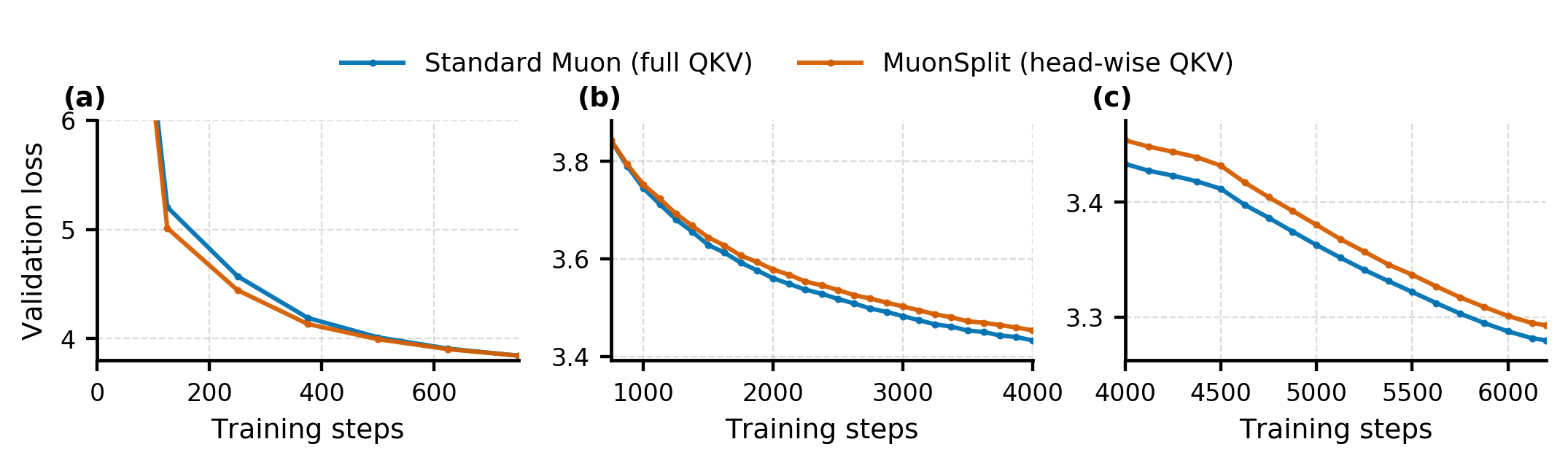
Worked on production optimizers, training stability, and scaling laws. The work linked effective learning-rate dynamics to transferable schedules and Hyperball optimizers.

Optimizer designStabilityScaling laws

Ant Group · BaiLing

Research Intern · Pre-Training Algorithms Team

Nov 2025 — Mar 2026

Worked on production pre-training optimizers and late-stage model merging, studying how the geometry of training trajectories can be converted into cheaper improvements after training.

Model mergingTrajectory geometryPre-training

02 / Research roadmap

From first principles to training recipes.

I specialize in large language model pre-training, with a focus on optimization, training dynamics and stability, scaling laws, and model merging. My work follows a consistent loop: identify structure in large-scale training, explain it through optimization and spectral dynamics, then turn the mechanism into a robust recipe that survives scale.

  1. 01

    Read the dynamics

    Find the quantities that actually organize training: effective learning rate, sharpness, singular spectra, and checkpoint trajectories.

    Signal → structure
  2. 02

    Design the geometry

    Use subspace structure to reason about Muon, Shampoo, momentum, and model merging—not as isolated tricks, but as geometric operators.

    Structure → algorithm
  3. 03

    Make it scale

    Translate controlled experiments into stable schedules, optimizer choices, and overtraining ladders for production pre-training.

    Algorithm → recipe

03 / Publications

Selected work.

Seven projects across pre-training dynamics, optimizer geometry, and scalable training. * equal contribution

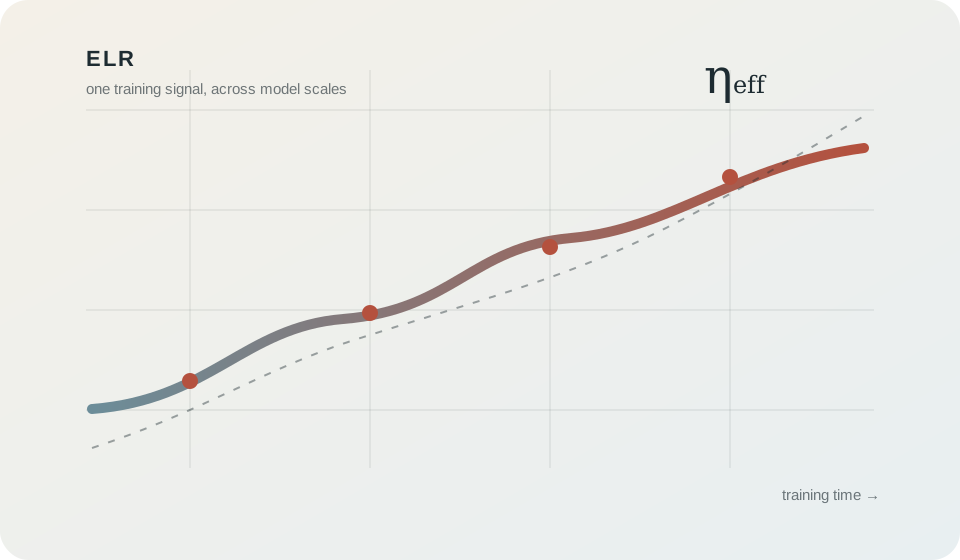
Conceptual view of effective learning rate as a scale-transfer signal ELR view
Tencent Hy Research · 2026Pre-training dynamics

From LR to ELR: A Better Heuristic for Pretraining Dynamics

Zhanpeng Zhou*, Wenjie Zhou*, Yufei Gu*, Juqiu Wang, Guanwei Zhang, Ruobing Xie, Xianbiao Qi, Yushi Bai, Kaifeng Lyu, Shunyu Yao

Reframes the update scale through an effective learning rate that tracks angular parameter motion. The signal predicts loss more consistently across width and depth and motivates a minus-square-root schedule that transfers from speedruns to a 6B-MoE scaling ladder.

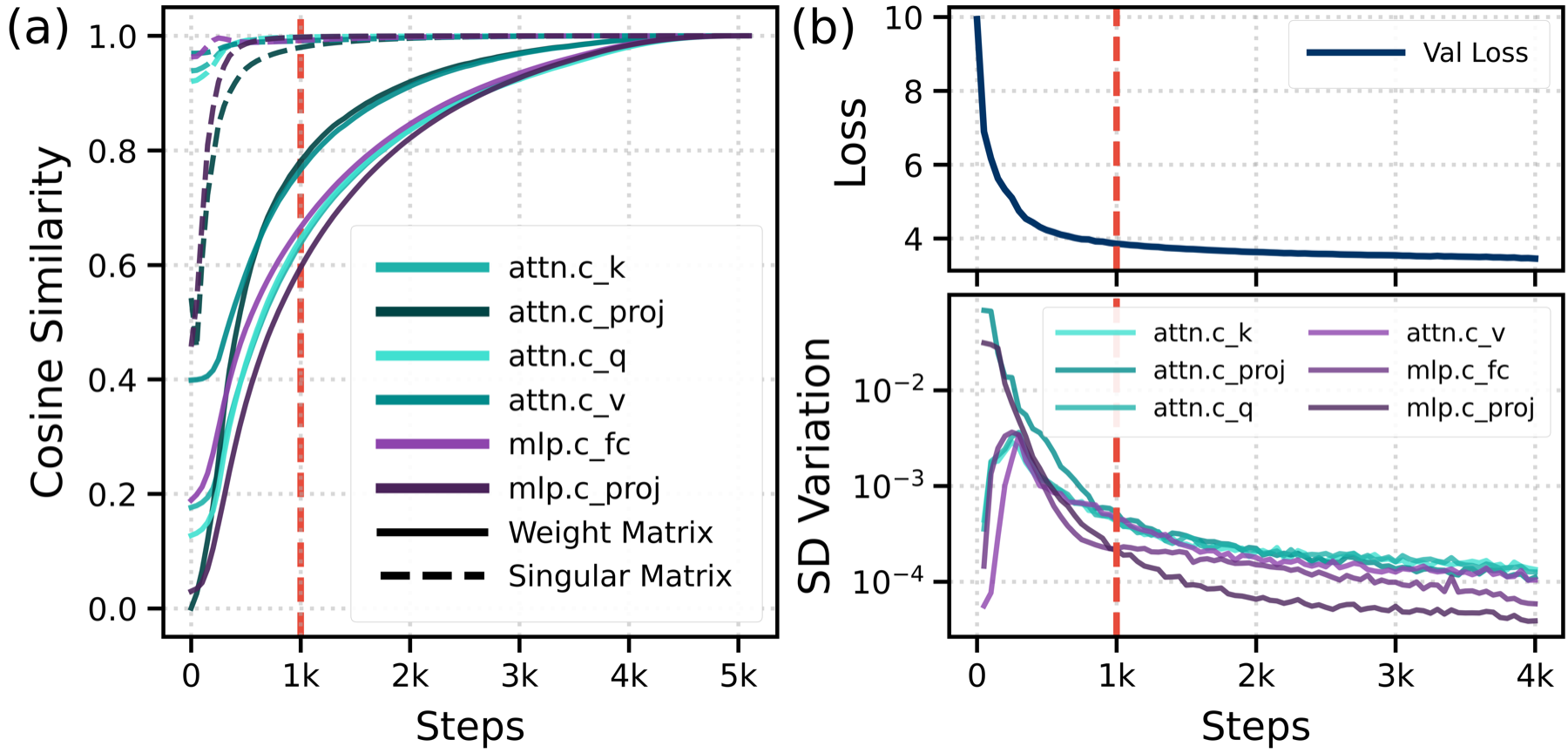
Early stabilization of singular distributions aligned with two-phase loss dynamics Fig. 1
ICML 2026Spectral dynamics

The Stability of Singular Distribution: A Spectral Perspective on the Two-Phase Dynamics of Language Model Pre-training

Hongtao Zhang*, Wenjie Zhou*, Chenxi Jia, Wei Chen, Xueqi Cheng

Identifies Stability of Singular Distribution (SoSD): normalized singular spectra settle early, at the same point that loss enters its slow phase. The effect persists across model families, schedules, weight decay, and AdamW/Muon, giving a spectral explanation of two-phase training.

Overview of how Bregman divergence choices shape Shampoo preconditioning Fig. 1
Under review · 2026Shampoo

How Bregman Divergences Shape Shampoo

Bing Liu, Wenjie Zhou, Chengcheng Zhao, Hongtao Zhang, Boao Kong, Felix Dangel, Wu Lin

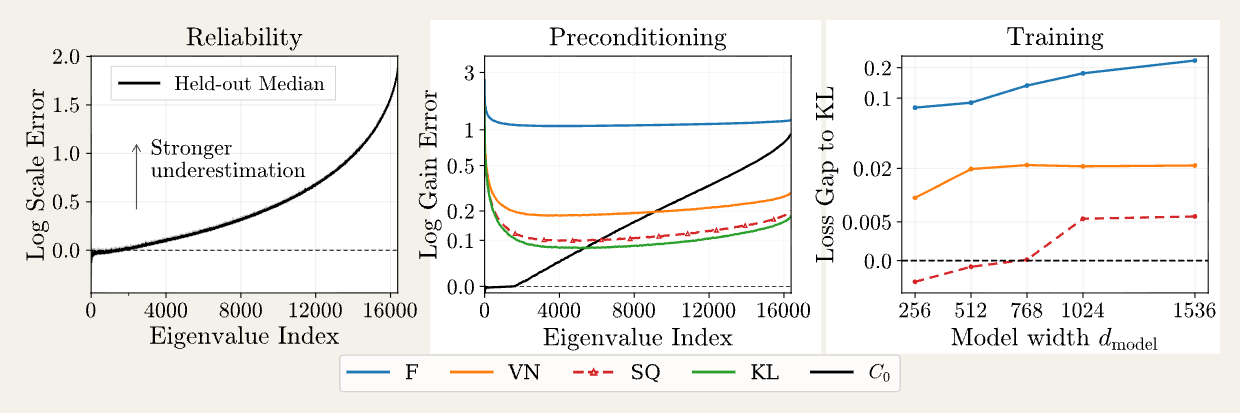
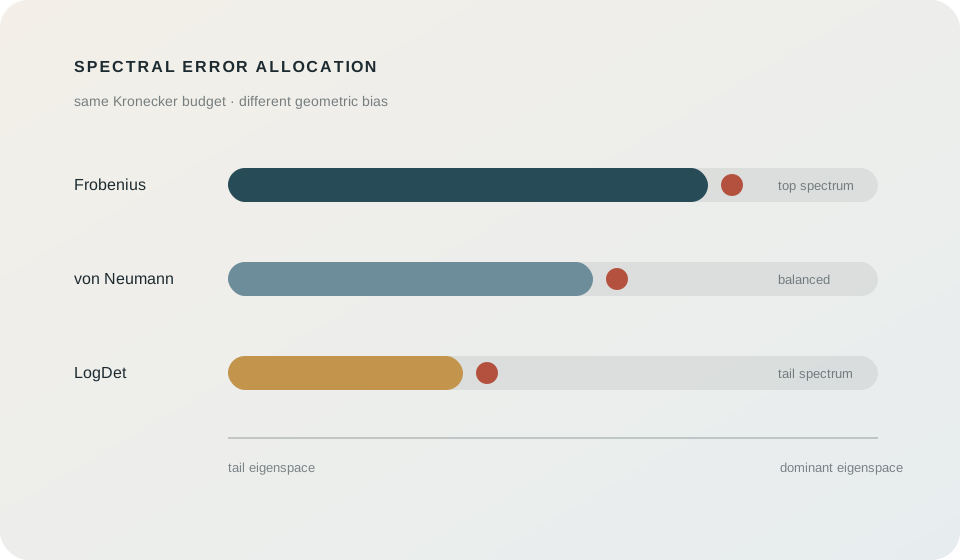
Builds a unified Bregman-divergence view of Shampoo’s Kronecker approximation. It shows how each divergence redistributes spectral error and compensates differently for finite-sample bias, then connects those choices to GPT-2 pre-training behavior.

04 / Open experiments

05 / Contact

Let’s talk pre-training.

I am always interested in clear empirical questions about optimization, training dynamics, and scale.

WeChat ID copied